- Daily Industry Report
- Posts
- Daily Industry Report - March 20
Daily Industry Report - March 20


Jake Velie & Robert Shestack
March 20, 2026

Your summary of the Voluntary and Healthcare Industry’s most relevant and breaking news; brought to you by the Health & Voluntary Benefits Association®
 Jake Velie, CPT |  Robert S. Shestack, CCSS, CVBS, CFF |
New NAIC group wades into the skyrocketing cost of health insurance
By John Hilton – A new National Association of Insurance Commissioners working group aims to identify policy solutions to rising health care costs and insurance premiums, intending to produce a practical guide for state policymakers by the end of the year. The Health Care Affordability and Mitigation Working Group met for the first time last week. Members discussed a 2026 work plan, outlining a fast-paced schedule to develop affordability recommendations for regulators and lawmakers. The initiative will focus on examining factors that drive health care costs and insurance premiums, including expenses within the health system that ultimately flow into insurance pricing. Read Full Article...
HVBA Article Summary
NAIC Working Group Emphasizes Solution-Focused Approach: Insurance regulators have formed a working group focused on identifying practical solutions to rising health insurance costs rather than revisiting well-known market challenges. Led by Kate Harris of the Colorado Division of Insurance, the group will analyze key cost drivers such as hospital pricing, prescription drug spending, and benefit design. Members plan to compile a series of shorter policy briefs instead of a lengthy report so state policymakers can more easily evaluate strategies to improve affordability.
Rising Drug Costs and Provider Fees Identified as Key Cost Drivers: Regulators noted that prescription drug spending continues to grow as a share of overall health care costs, increasing from roughly 22% to more than 25% in recent years. Officials also raised concerns about provider pricing practices, including hospital expansion and the potential cost markups associated with services such as MRIs and CT scans. Additionally, hospital facility fees were highlighted as a growing affordability issue in some states, with regulators warning that these charges may discourage patients from seeking necessary care.
State Policy Experiences and Stakeholder Input Will Shape Recommendations: The working group plans to evaluate existing state initiatives, including Colorado’s standardized “Colorado Option” plans offered by private insurers in the individual and small-group markets. Regulators intend to gather feedback from state officials, industry groups, and other stakeholders as they refine potential policy solutions. Under the current timeline, the group expects to release a draft framework by late summer or early fall and finalize recommendations ahead of the NAIC’s winter national meeting.

HVBA Poll Question - Please share your insightsWhat increase in voluntary benefit plan participation would compel you to advocate for a new digital tool to your clients? |
Our last poll results are in!
26.05%
Of the Daily Industry Report readers who participated in our last polling question, when asked “What is your biggest challenge when it comes to employee benefits today?”, respondents were tied by responding with either “Rising costs while still trying to offer meaningful benefits that employees actually use,” or “Low employee utilization or engagement.”
24.28% of respondents reported that “Offering competitive benefits without adding administrative complexity is their biggest challenge, while the remaining 23.62% believe “providing benefits for hourly and part-time workers without increasing cost” is their biggest challenge. Ignite Health powered this polling question.
Have a poll question you’d like to suggest? Let us know!
FDA approves higher-dose Wegovy
By Ella Jeffries – Novo Nordisk’s high-dose formulation of its blockbuster weight loss drug Wegovy has been approved by the FDA. The agency approved Wegovy “HD,” a 7.2-mg injection of semaglutide, to reduce excess body weight and support long-term weight management, according to a March 19 news release from the drugmaker. The FDA had granted the therapy a Commissioner’s National Priority Voucher to accelerate review of the treatment, which Novo Nordisk said it expects to launch in the U.S. in April. Read Full Article...
HVBA Article Summary
Clinical Trials Demonstrate Significant Weight Loss Outcomes: Novo Nordisk’s approval was supported by results from a 72-week clinical trial involving about 1,400 adults with obesity. Patients receiving the 7.2-mg dose achieved an average weight loss of 20.7%, with approximately one-third of participants losing 25% or more of their body weight. These findings highlight the potential effectiveness of the higher-dose treatment in supporting substantial weight reduction.
Additional Trial Shows Effectiveness in Patients With Type 2 Diabetes: A separate 72-week study included around 500 adults with obesity and Type 2 diabetes. Participants treated with the 7.2-mg dose experienced a mean weight loss of 14.1%. The company reported that the safety and tolerability profile was consistent with previous clinical trials evaluating semaglutide for weight management.
Approval Coincides With Expansion and Pricing Changes for GLP-1 Portfolio: The approval comes as Novo Nordisk continues expanding its GLP-1 product offerings and pricing strategy. In January, the company launched an oral version of Wegovy priced at $299 per month for higher doses through a self-pay platform. Novo Nordisk has also announced plans to reduce U.S. list prices for Wegovy, Ozempic, and Rybelsus to $675 per month starting Jan. 1, 2027, representing roughly a 50% reduction for Wegovy and about 35% for Ozempic.
Payers, hospitals pan CMS' plan to bring non-network plans to ACA exchanges
By Dave Muoio – Insurers and hospitals have come together to rebuke a Trump administration proposal to roll back limits of plan designs that may be listed on the Affordable Care Act’s (ACA’s) exchanges. In February, the Centers for Medicare & Medicaid Services (CMS) included in its Notice of Benefit and Payment Parameters for 2027 Proposed Rule a plan to allow some non-network plans to obtain qualified health plan (QHP) status, which is necessary to be listed. Read Full Article...
HVBA Article Summary
CMS Proposal Would Allow Non-Network Plans to Qualify as QHPs: CMS has proposed allowing certain non-network health plans to qualify as Qualified Health Plans (QHPs) on the Affordable Care Act marketplaces beginning in 2027. These plans would not maintain traditional provider contracts but would need to demonstrate that multiple providers accept the plan’s benefit amount as full payment. CMS stated the policy could lower healthcare costs by promoting price transparency, encouraging consumers to negotiate with providers, and reducing administrative costs tied to network management.
Industry Groups Jointly Oppose the Proposal: Major organizations representing insurers and hospitals—including AHIP, the Association for Community Affiliated Plans, the Alliance of Community Health Plans, the Federation of American Hospitals, and America’s Essential Hospitals—submitted a joint letter urging CMS to reconsider the policy. The groups argued that non-network plans may not be able to provide the comprehensive coverage required for QHP certification. They also warned that consumers may struggle to understand the differences between network and non-network plans, increasing the risk of higher-than-expected out-of-pocket costs.
Concerns Raised About Oversight, Consumer Protection, and Market Impact: Stakeholders questioned how CMS would define and enforce adequate provider access under the proposal and how consumers would be protected from balance billing. The American Hospital Association similarly warned that relying on plan attestations of provider access may not ensure sufficient care availability. Critics also cautioned that the proposal could affect the stability of the individual insurance market by attracting healthier enrollees, potentially distorting risk pools and increasing uncompensated care.

Despite new federal actions, prescription drug worry hits highest level since 2018
By Joel Kranc – A new report from the health policy research firm KFF, says the Trump administration has renewed focus on lowering the cost of prescription drugs in the U.S., including the launch of TrumpRx. The latest polling from KFF shows that about 4 in 10 U.S. adults (41%) say it is likely the Trump administration's policies will lower prescription drug costs for people like them, but views generally follow party lines. Only the president's base remains positive, with 79% of Republicans and 88% of MAGA supporters saying it is likely the administration will lower prescription drug costs, while much fewer independents (35%) and Democrats (11%) say it is likely. Read Full Article... (Subscription required)
HVBA Article Summary
Bipartisan Support for Increased Drug Price Regulation: Public opinion shows broad agreement across political parties that the government should play a larger role in regulating prescription drug costs. At least two-thirds of Republicans, Democrats, and independents believe there is currently not enough government regulation in this area. This consensus suggests that prescription drug pricing is an issue where voters across the political spectrum support stronger policy action.
Growing Public Concern About Prescription Drug Affordability: A majority of Americans remain worried about paying for prescription medications for themselves or their families. The latest KFF poll reports that 59% of adults express concern about affordability, the highest level recorded since the organization began asking the question in 2018. Concern is especially high among households earning less than $40,000 annually and among individuals taking four or more prescription medications.
Voter Trust on Drug Cost Solutions Favors Democrats but Shows Frustration: As the 2026 midterm elections approach, more voters say they trust the Democratic Party to better address prescription drug costs than the Republican Party. About 38% of voters trust Democrats compared with 28% who trust Republicans on the issue. However, 27% of voters say they trust neither party, reflecting broader frustration with policymakers over rising health care and prescription drug costs.
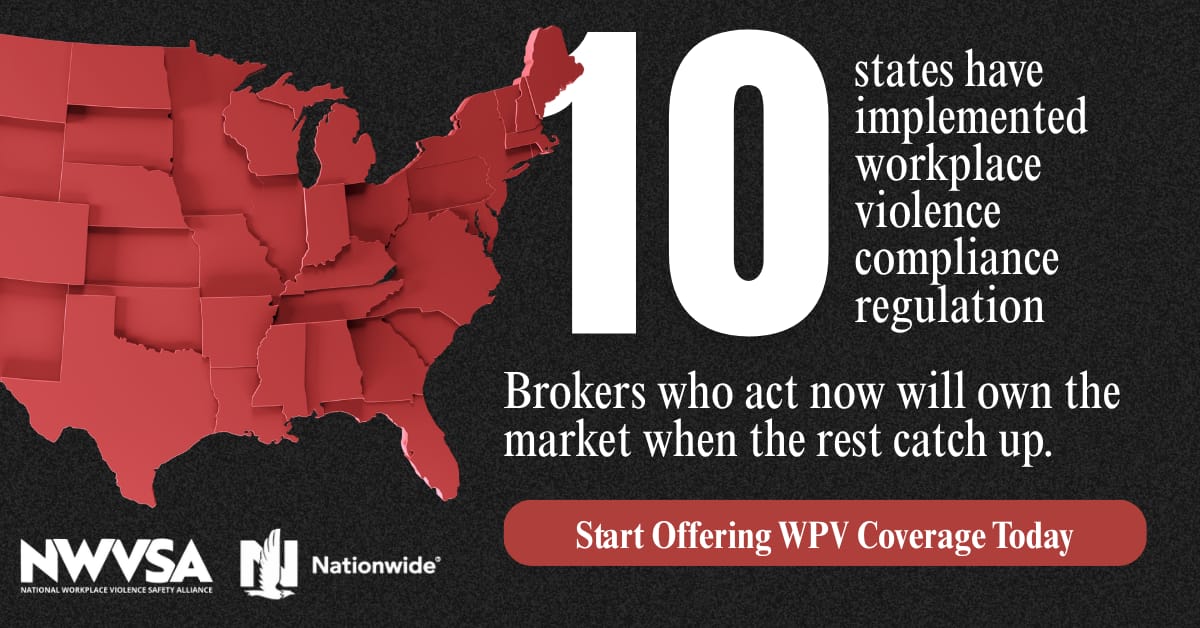
Physicians still waiting for CMS clarity on anti-workplace violence signs
By Caroline Catherman – Ever wonder why airport security has signs that discourage violence against its workers, but some emergency departments don’t? Healthcare leaders say that’s because they aren’t sure how to phrase the signs without getting in trouble with regulators. “The most basic element of prevention is often out of reach—that is, signage that sets expectations for respectful behavior and emphasizes that violence toward staff, patients, or visitors is unacceptable and could have consequences,” reads a Jan. 20 letter from medical societies and trade groups to the Centers for Medicare and Medicaid Services (CMS). Read Full Article...
HVBA Article Summary
Healthcare Worker Violence Remains Widespread: Surveys from the American College of Emergency Physicians and National Nurses United show that workplace violence is common in healthcare settings. A January 2024 ACEP survey found that 91% of emergency physicians reported being threatened or attacked at work in the past year, while an NNU survey found 82% of nurses had been assaulted or threatened. In response to these concerns, 48 U.S. states have enacted laws outlining penalties for violence against healthcare workers, including fines and felony charges.
Hospitals Seek Federal Guidance on Violence-Related Signage: Healthcare groups have asked the Centers for Medicare & Medicaid Services (CMS) to provide clearer written guidance on signage warning against violence in hospitals. CMS has said signage is allowed as long as it does not violate the Emergency Medical Treatment and Labor Act (EMTALA), which guarantees access to emergency care. However, hospital leaders say federal surveyors have questioned certain signs, and they want clearer examples of wording or placement that would comply with EMTALA requirements.
Violence Prevention Requires Broader Strategies Beyond Signs: Experts and healthcare organizations emphasize that reducing violence in hospitals requires a multifaceted approach that addresses staff training, patient interactions, and environmental factors. Accrediting bodies such as The Joint Commission recommend implementing workplace violence prevention programs and providing training for healthcare workers. Advocacy groups also support federal proposals like the Workplace Violence Prevention for Health Care and Social Service Workers Act, which would establish national requirements to improve protections for healthcare and social service workers.

CMS wants seniors to use AI for care navigation
By Emily Olsen – The CMS wants to deploy artificial intelligence tools to Medicare beneficiaries to help navigate their care, CMS officials said at the HIMSS conference Thursday. The agency is already using the technology to detect fraud. But the CMS also hopes to get the technology into patients’ hands, both to assist seniors and to hopefully bring down rising healthcare spending, which continues to outpace the rest of the economy. Read Full Article...
HVBA Article Summary
Healthcare Lags Other Sectors in Cost Reductions from Technology: CMS Administrator Dr. Mehmet Oz stated that while many sectors of the U.S. economy have used technology to drive deflation and reduce costs, healthcare has remained inflationary. This contrast highlights ongoing challenges in using technological advancements to improve efficiency and lower healthcare spending. The issue underscores the need for new tools and systems that can better modernize healthcare delivery.
CMS Exploring AI Tools to Help Medicare Beneficiaries Navigate Care: Federal officials are developing AI agents designed to help Medicare beneficiaries find doctors and choose Medicare Advantage plans. The initiative is part of broader efforts to expand digital health tools and improve patient access to healthcare information. However, surveys show that only about 31% of Medicare beneficiaries aged 65 and older currently trust AI to access medical records or provide personalized health advice.
AI Expansion in Healthcare Includes Patient Assistance and Fraud Detection: The CMS Health Tech Ecosystem initiative aims to increase the availability of conversational AI tools that help patients navigate care and manage health questions. At the same time, CMS is using AI algorithms trained on past enforcement cases to detect potential Medicare fraud and identify suspicious provider activity. While officials believe AI can improve healthcare oversight and access, experts caution that chatbots may sometimes provide inaccurate or misleading medical information, requiring careful oversight.

Benefits lessons to learn from a brutal flu season
By Lee Hafner – Severe flu cases continue to rock American households, the health system and the workplace, with patients being hospitalized and seeking antiviral medication at record levels. The last two flu seasons have been particularly vicious. Since the start of the 2024-2025 season, the Centers for Disease Control and Prevention (CDC) estimates there have been 78 million cases, more than a million hospitalizations, and 67,000 flu-related deaths. The average hospital stay for flu patients exceeds $20,000, according to claims database MarketScan. Read Full Article... (Subscription required)
HVBA Article Summary
Rising Flu Severity and Systemic Strain: The recent flu seasons have resulted in a significant increase in severe cases, leading to higher rates of hospitalization and greater demand for antiviral medications. This trend places additional pressure on healthcare resources, including clinicians, pharmacies, and hospitals, which are already operating near capacity. The increased severity also translates to more time away from work for employees, impacting both productivity and healthcare costs for employers.
Importance of Preventive Care and Communication: Benefit leaders are encouraged to proactively educate employees about preventive measures such as vaccinations, routine checkups, and the use of health savings or flexible spending accounts for eligible expenses. Clear communication about covered telehealth services and early intervention options can help employees access care quickly, reducing the risk of complications and workplace disruptions. Providing timely reminders and accessible information empowers employees to make informed decisions about their health.
Impact on Working Parents and the Role of Digital Tools: The highest rates of antiviral use have been observed among children under 17, which can lead to unexpected work interruptions for parents who must balance caregiving with job responsibilities. Digital tools and virtual care platforms enable employees to seek medical advice and treatment promptly, often within the first 24 to 48 hours of symptom onset. By leveraging these resources and promoting good hygiene practices, employers can help minimize absenteeism and maintain a healthier workforce.
